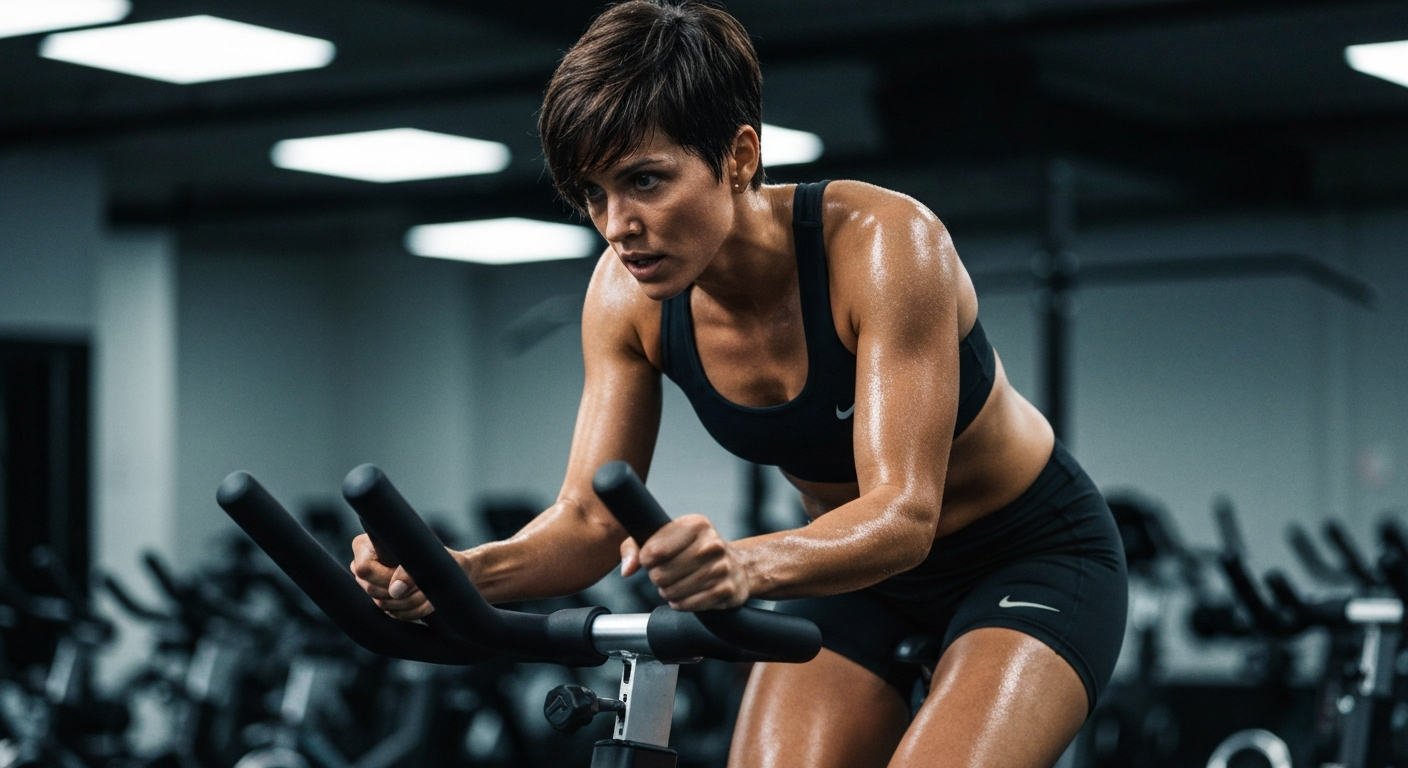
Rutina de gimnasio para definir: el mejor plan de entrenamiento para perder grasa
Descubre la rutina de gimnasio definitiva para definir. Aprende a combinar el levantamiento de pesas y el ejercicio cardiovascular para quemar grasa sin perder la masa muscular que tanto te ha costado ganar.

ArcheBody Team
Are You Ready to Reveal Your Best Physique?
Embarking on a cutting phase is a significant step towards achieving a leaner, more defined physique. It's a period where the focus shifts from building muscle to shedding excess body fat, revealing the hard-earned muscle underneath. But how do you navigate the gym during this crucial time to maximize fat loss without sacrificing your precious muscle mass? The key lies in a strategic approach to your training, blending the right kind of resistance work with effective cardiovascular exercise.
Unlock Your Ultimate Cutting Routine with AI
Discover personalized workout plans, track your progress, and get real-time nutrition analysis to accelerate your fat loss journey. Let Arche Body be your virtual fitness coach.
Start Your TransformationHow to Train During a Cut
Training during a cutting phase requires a nuanced approach. The primary goal is to create a calorie deficit, which is predominantly achieved through diet. However, your training plays a vital role in ensuring that the weight you lose is primarily fat, not muscle. This means continuing to challenge your muscles with resistance training while strategically incorporating cardio to boost calorie expenditure. The temptation to drastically reduce calories and intensity in the gym is strong, but this can be counterproductive. Maintaining strength and muscle mass should be a priority.
Why You Shouldn't Drop the Heavy Weights
It might seem intuitive to switch to lighter weights and higher repetitions when cutting, aiming for a "toning" effect. However, this approach often overlooks a fundamental principle of muscle preservation: mechanical tension. Lifting heavy weights, even with slightly lower volume than during a bulking phase, signals to your body that your muscles are still needed and should be preserved. Dropping the heavy weights can lead to muscle catabolism (breakdown), which is the opposite of what you want during a cut.
According to a study published in the Journal of Strength and Conditioning Research, maintaining high-intensity resistance training during a calorie deficit is crucial for preserving lean muscle mass. This indicates that continuing to lift challenging weights is a cornerstone of an effective cutting routine.
Focus on maintaining your strength levels as much as possible. This is a strong signal to your body to hold onto muscle tissue.
The goal is not to set new personal records for strength during a cut, but rather to maintain the strength you've built. This involves performing compound exercises like squats, deadlifts, bench presses, and overhead presses with challenging loads, typically in the 5-10 repetition range.
Integrating HIIT and Steady-State Cardio
Cardiovascular exercise is an indispensable tool for increasing your daily calorie expenditure and promoting fat loss. However, the type and amount of cardio you incorporate can significantly impact your results. A balanced approach incorporating both High-Intensity Interval Training (HIIT) and steady-state cardio is often the most effective.
HIIT involves short bursts of intense exercise followed by brief recovery periods. This type of training is highly efficient for burning calories in a shorter amount of time and can also boost your metabolism post-workout, a phenomenon known as EPOC (Excess Post-exercise Oxygen Consumption).
Steady-state cardio, on the other hand, involves performing cardio at a moderate intensity for a sustained period. Activities like brisk walking, jogging, cycling, or using the elliptical machine fall into this category. This type of cardio is excellent for burning calories directly during the exercise session and can aid in recovery without being overly taxing.
Overtraining with excessive cardio can hinder muscle recovery and even lead to muscle loss. Find a balance that complements your resistance training.
A meta-analysis published in the Sports Medicine journal found that both HIIT and moderate-intensity continuous training are effective for improving cardiovascular health and reducing body fat. The choice between them, or the integration of both, often depends on individual preference, recovery capacity, and the overall training schedule. For cutting, using HIIT 1-2 times per week and incorporating steady-state cardio on other days or after weight training sessions can be a highly effective strategy.
Balancing Weightlifting and Cardio
The synergy between weightlifting and cardio is paramount during a cutting phase. It's not about choosing one over the other, but about understanding how they complement each other to achieve your fat loss goals while preserving muscle.
Why You Shouldn't Drop the Heavy Weights
As mentioned earlier, continuing to lift heavy weights is crucial for signaling muscle retention. Muscle tissue is metabolically active, meaning it burns calories even at rest. The more muscle mass you preserve, the higher your resting metabolic rate, which aids in sustained fat loss. When you drastically reduce your calorie intake without adequate resistance stimulus, your body may start to break down muscle for energy.
Integrating HIIT and Steady-State Cardio
The role of cardio during a cut is to increase the calorie deficit. HIIT can be a powerful tool for this, but it's demanding. Performing HIIT too frequently or too close to heavy lifting sessions can impair recovery. Steady-state cardio is less taxing and can be performed more often, making it a good option for increasing overall calorie expenditure without compromising recovery.
A common strategy is to perform 3-4 days of resistance training, 1-2 sessions of HIIT on separate days or after lifting, and 2-3 sessions of steady-state cardio. The exact programming will depend on your individual response and recovery.
A 5-Day Gym Workout Plan for Cutting
This 5-day split is designed to hit all major muscle groups while allowing for adequate recovery. It prioritizes compound movements and incorporates strategic cardio.
Day 1: Upper Body (Push Focus)
-
Bench Press: 3 sets of 5-8 reps
-
Overhead Press: 3 sets of 6-10 reps
-
Incline Dumbbell Press: 3 sets of 8-12 reps
-
Lateral Raises: 3 sets of 10-15 reps
-
Triceps Pushdowns: 3 sets of 10-15 reps
-
Cardio: 20 minutes of steady-state cardio (e.g., incline walking)
Day 2: Lower Body
-
Squats: 3 sets of 5-8 reps
-
Romanian Deadlifts: 3 sets of 8-12 reps
-
Leg Press: 3 sets of 10-15 reps
-
Hamstring Curls: 3 sets of 10-15 reps
-
Calf Raises: 3 sets of 15-20 reps
Day 3: Rest or Active Recovery
- Light activity like walking or stretching.
Day 4: Upper Body (Pull Focus)
-
Pull-ups (or Lat Pulldowns): 3 sets to failure (or 8-12 reps)
-
Barbell Rows: 3 sets of 6-10 reps
-
Seated Cable Rows: 3 sets of 8-12 reps
-
Face Pulls: 3 sets of 12-15 reps
-
Bicep Curls: 3 sets of 10-15 reps
-
Cardio: 15 minutes of HIIT (e.g., sprint intervals on a bike)
Day 5: Full Body & Core
-
Deadlifts: 1 set of 5 reps (heavy, focus on form)
-
Dumbbell Bench Press: 3 sets of 8-12 reps
-
Dumbbell Lunges: 3 sets of 10-12 reps per leg
-
Plank: 3 sets, hold for 30-60 seconds
-
Russian Twists: 3 sets of 15-20 reps per side
Day 6: Cardio
- 30-40 minutes of steady-state cardio of your choice. This could be cycling, jogging, or using an elliptical. For those who enjoy it, this is a great opportunity to explore a steady-state cardio session on a stationary bike.
Day 7: Rest
This plan is a template and should be adjusted based on your recovery, experience, and preferences. Listening to your body is crucial during a cutting phase.
Optimizing Your Gym Routine with AI
The power of Artificial Intelligence in nutrition and fitness is revolutionizing how individuals approach their health goals. Arche Body, your intelligent nutrition companion, can significantly enhance your cutting journey by providing data-driven insights and personalized guidance.
Imagine being able to log your meals by simply taking a photo. Arche Body's AI analyzes the image, identifying foods and estimating portion sizes to calculate your macronutrient and calorie intake. This eliminates the tediousness of manual logging and provides accurate data for tracking your progress.
Use Arche Body to monitor your protein intake. Sufficient protein is vital for muscle preservation during a calorie deficit.
Furthermore, Arche Body can analyze your workout consistency and performance, helping you understand how your training impacts your body composition. By tracking your intake and expenditure, the AI can help you fine-tune your diet and training to ensure you're in the optimal zone for fat loss while maintaining muscle. This level of personalized feedback is a game-changer for anyone serious about achieving their physique goals.
Personalize Your Fat Loss with AI Nutrition
Stop guessing and start optimizing. Arche Body provides real-time analysis of your meals and workouts, helping you achieve your cutting goals faster and more efficiently.
Get Your AI Nutrition PlanConclusion: Consistency is the Key to Shredding
Achieving a shredded physique during a cutting phase is a marathon, not a sprint. While the gym routine provides the stimulus for fat loss and muscle preservation, true success hinges on unwavering consistency. This means adhering to your nutrition plan day in and day out, showing up for your workouts even when motivation wanes, and getting adequate rest and recovery.
The ultimate cutting gym routine is one that you can stick to. It should be challenging enough to promote adaptation but sustainable enough to prevent burnout. By strategically balancing weightlifting and cardio, prioritizing compound movements, and leveraging tools like AI-powered nutrition tracking, you create a powerful synergy that drives fat loss effectively.
Remember, the numbers on the scale are only one part of the story. Focus on how your clothes fit, how you look in the mirror, and how you feel. These qualitative measures often provide the most rewarding feedback. Embrace the process, stay consistent, and you will undoubtedly reveal the leaner, more defined physique you've been working towards.
Frequently Asked Questions (FAQ)
What is the best type of cardio for cutting?
A combination of HIIT and steady-state cardio is often most effective. HIIT burns a lot of calories in a short time, while steady-state cardio is less taxing and can be done more frequently to increase overall calorie expenditure.
How much cardio should I do when cutting?
This varies greatly depending on your diet, training intensity, and recovery. A good starting point is 2-4 sessions per week, adjusting based on your fat loss progress and energy levels.
Should I focus on weight loss or fat loss?
Focus on fat loss. Weight loss can include muscle and water, while fat loss specifically targets adipose tissue, leading to a leaner physique. Preserving muscle is key.
How important is protein intake during a cut?
Extremely important. Adequate protein intake helps preserve muscle mass while in a calorie deficit and can also contribute to satiety, helping you feel fuller for longer.
Can I build muscle while cutting?
While significant muscle growth is difficult during a calorie deficit, it is possible to preserve or even gain a small amount of muscle, especially for beginners or those returning to training after a break, by prioritizing protein and intense resistance training.
How long should a cutting phase last?
The duration depends on your individual goals and starting point. Typically, cutting phases last from 8 to 16 weeks, with potential "diet breaks" interspersed to manage metabolic and psychological fatigue.